I’ve owned Standardbred pacers for over 20 years but until a year ago they were bought with racing in mind. I would always end up dabbling in other disciplines with my long-term racing companions (somewhat controversially but with very joyous outcomes), but their main job was racing.
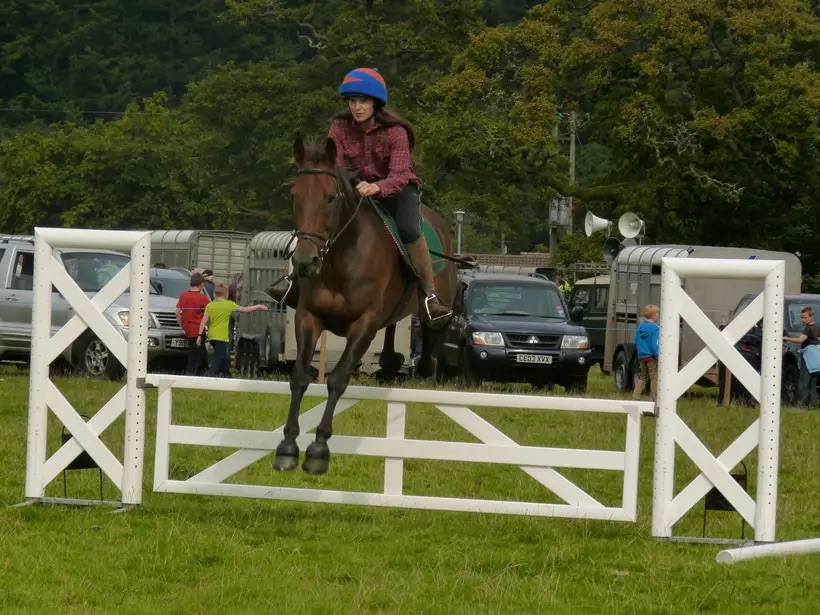
In January 2024 this all changed. I started buying Standardbred pacers and French Trotters to sell (as well as keeping one or two at a time to race myself). This forced me to think more carefully about what is involved in turning a racehorse into a riding horse, and here are some of the things I’ve learned.
- If they’ve raced, they will have a ‘racing button’. It’s not the same for every horse. Some respond to specific noises, others to certain environments (a wide expanse of hill, a beach, or a straight and slightly uphill stretch of road) or tack. Be very careful using ‘shhh’ to calm an exuberant one as many drivers use this sound to mean ‘GO’. Many ex harness racers will light up at the sound of a diesel pick-up truck’s engine because this is what typically carries the starting gate that they line up behind before the race! I don’t advertise my horses until I’ve found their racing button or buttons, because I can’t tell people how not to press it if I don’t know where it is myself. (Finding the racing buttons is one of my favourite parts of the job.)
- They will also have an off switch, in nearly every case. You do get exceptions who are hotter and don’t learn to stand quietly tied to the box at the races, but they are rare. The majority of harness racers have a ‘park button’, usually associated with being tied up at the lorry or trailer soon after finishing their race. The race day routine (which nearly all of them happily slot into) is that you stand tied at the box for most of the day, until it is your turn to race. Most horses light up as soon as they set foot on the track. After the race, the first three finishers will return to the home straight to have their microchips read, while the others will head straight back to the box, where they are tied up to be unhitched, unharnessed and washed. They will usually then be walked around in hand to cool off before being tied up once again at the side of the box, or loaded up to wait in the box until all the races are over. Why this is relevant is because you can mimic this routine (going from racing to tying up sensibly in a matter of minutes) in order to find the ‘park button’. Occasionally I have found myself in situations where a recently retired harness racer has found himself in a race-like situation and got wound up to the point where it didn’t feel safe. The best way to handle it is to jump off, go to his head (or send your groom if driving), and take him towards something solid to tie him to, ideally a wall or gate but a even tree might do. If you don’t have a headcollar and rope on you (and why would you?), sometimes the mere act of pretending to tie them up can be enough.
- Teaching standing is easy. Fidgeting is a common Achilles Heel of the recently retired harness racer, as many trainers don’t teach them to stand while they’re working because they never need to (other trainers insist upon it, and I’m grateful to them). Fortunately there is an easy fix which I have found to have consistently good results. The first time I ask a horse to stand, I only ask for half a second. For some, this is all they can manage before trying to march off or protesting in some fashion. But as long as I keep the demands very low, I can gradually build up the length of time they stand for. The trick is to ask them to walk on before they take matters into their own hands. Lots of walk-halt transitions are very helpful, and as long as you don’t set them up to fail by insisting they stand for longer than they can manage without fidgeting, they should make rapid progress.
- Getting off is good. For the past few years I’ve been very lucky to have a constant succession of brave horses who teach each other good habits and created a culture of courage in my yard. In 2025 this all changed, with two young racehorses who were very wary of the big wide world, and fed off each other’s anxieties. It’s tempting to try to fight them into going past something they don’t like, but I’ve learned that getting off and leading them for a few minutes is so much more effective (and quicker) in the long run.
- Remuscling takes time and work. When a horse has been trained to trot or pace at speed on a flat track, other forms of work are difficult for them because they don’t have the right muscles. It takes time to build up a new set of muscles for a new career, but a good physiotherapist and schooling can really help. And don’t set them up to fail by insisting on canter in the school until they can manage it in a wide open space, ideally uphill, which makes canter much easier for them.
- Is it worth the effort? ABSOLUTELY.
 Collingwood Standardbreds
Leave a comment