


There are two types of American Standardbred: pacers and trotters. In the UK it is very unusual to find a Standardbred trotter, so if you see the word Standardbred you should assume the horse carries the pacing gene (DMRT-3). This means he is (probably) capable of pacing, but he is also (probably) capable of walking, trotting, cantering and galloping. Some individual Standardbreds will avoid one or more of these five gaits, but it is more common for them to be able to do all of them to some degree. It is normal for them to have favourite gaits that they will offer more readily, and for them to find some gaits more difficult than others. This varies from individual to individual, and improves with training.
This was my first Standardbred, Vintage Lobell, who got a lot of undivided attention heaped on him and as a result was good at everything (except racing, unfortunately). After a little schooling he was equally good at all five gaits, and he was also a scopey jumper.
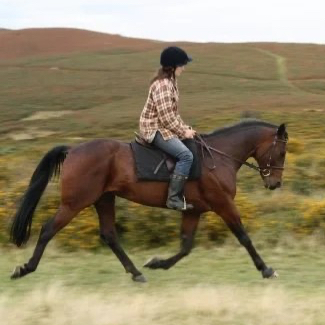
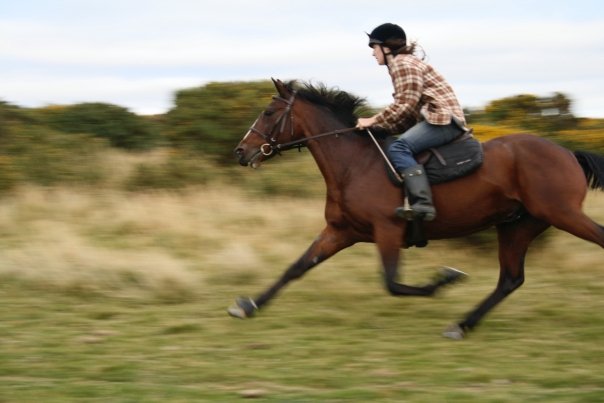
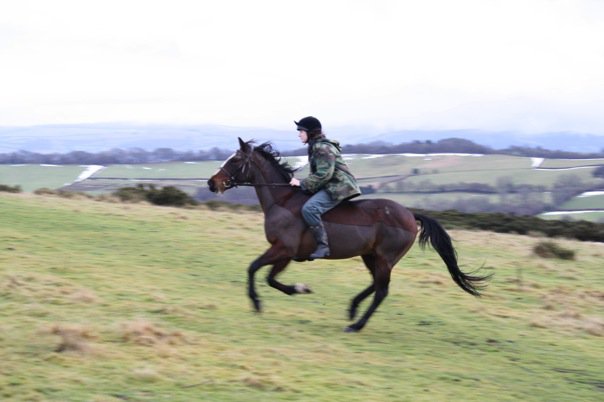
Schooling, conditioning and training can help them get better at your preferred gaits and the transitions between gaits, but you are never going to eradicate the DMRT-3 gene that gives them the ability to pace, so please don’t get cross with them for pacing— this gait is in their DNA (like an Icelandic horse).
In contrast to Standardbred pacers, French Trotters are bred to race at a trot — harness racing people will sometimes refer to this as square trotting. They are USUALLY more straightforward in the gait department because they generally don’t pace… but some do, or could if you pressed the right buttons. Their trot will be big and fast, and if they have just come off the track they may not yet understand the aids for canter. They will lend themselves to dressage and showing more readily than a pacer but they too will need time and work before they are competition-ready.
On the plus side, any horse with the DMRT-3 ‘pacing’ gene can in theory do other interesting gaits (such as rack, tolt and amble) which are highly prized and very comfortable— hence the popularity of Icelandics and other gaited breeds.
In the assessment process that each of my horses goes through, I figure out which are their stronger or more favoured gaits and which ones they may find harder. I can advise on which aids and strategies you can use in order to ask for a specific gait, but over time you will learn each other’s languages — especially as your horse builds up schooling muscles and his body and mind slowly alter from racehorse to pleasure horse. It is an interesting and very rewarding process (these horses tend to be quick and willing learners), but it’s not compulsory to do any schooling at all. If you just want to get from A to B without too much hard work, let the horse figure out what is the most appropriate gait for the speed and ground conditions, and just sit back and enjoy the ride (or drive).
 Collingwood Standardbreds